Hair Restoration
Hair restoration with EZPRF is a non-surgical option for patients who want to address thinning hair without surgery or extensive downtime. This treatment uses platelet-rich fibrin derived from your own blood and is commonly chosen by patients looking for a more natural, regenerative approach to scalp and hair support. EZPRF is often used as part of a strategy to help improve the environment around the hair follicle and support fuller-looking, healthier hair over time.
At Beatus Aesthetics, every hair restoration plan begins with a consultation. We evaluate your concerns, discuss your hair history, review the areas that feel thinner or weaker, and determine whether EZPRF is a good fit for your goals. Because hair loss can have different causes and patterns, the most effective plan is one built specifically around your needs rather than a one-size-fits-all treatment.
What is EZPRF hair restoration?
EZPRF hair restoration is a regenerative treatment that uses platelet-rich fibrin prepared from a small sample of your own blood. After the blood is processed, the PRF is strategically placed into areas of the scalp affected by thinning hair or reduced density. Because the treatment uses your own natural growth factors, it is often selected by patients who want a more biologic, non-surgical approach to hair restoration.
Many patients consider EZPRF when they first notice:
- Increased shedding
- A widening part
- Thinner hair near the temples
- Reduced density at the crown
- Hair that appears weaker, finer, or slower to grow
- Early changes in the hairline
Hair restoration is not only about treating visible loss. It is also about supporting scalp health and taking action early, when changes may still be mild to moderate. For many patients, starting treatment sooner can be an important part of maintaining density and preventing progression.
Benefits of hair restoration with EZPRF
Patients often choose EZPRF hair restoration because it offers a non-surgical treatment path with minimal downtime and a personalized feel. It can be a strong option for patients who want to support natural hair growth processes without relying on surgery.
Potential benefits of EZPRF hair restoration include:
- Non-surgical treatment for thinning hair
- Uses your own blood-derived growth factors
- Helps support healthier-looking hair over time
- Can be used on common areas of thinning such as the hairline, temples, and crown
- Little interruption to normal daily activities
- Personalized treatment planning based on hair pattern and goals
- Suitable for patients seeking early intervention for hair thinning
Who may be a good candidate?
You may be a good candidate for hair restoration with EZPRF if you:
- Are noticing thinning hair or increased shedding
- Want a non-surgical hair restoration option
- Have mild to moderate hair loss
- Want to support hair density and scalp health
- Prefer a treatment that uses your own natural biologic material
- Want a customized plan rather than a generic over-the-counter approach
A consultation is the best way to determine whether EZPRF is appropriate for you. Hair loss can be influenced by genetics, hormones, stress, age, styling habits, and other factors, so a personalized assessment is important before beginning treatment.
What areas can be treated?
Hair restoration treatment may be recommended for:
- Receding hairline
- Temple thinning
- Crown thinning
- Widening part
- Diffuse thinning across the scalp
- Areas where hair appears weaker or less dense
What to expect during your appointment
Your visit begins with a consultation and scalp assessment. We review your hair concerns, treatment goals, history of thinning or shedding, and whether you have tried other therapies in the past. If EZPRF is recommended, a small blood sample is collected and processed so the platelet-rich fibrin can be prepared for treatment.
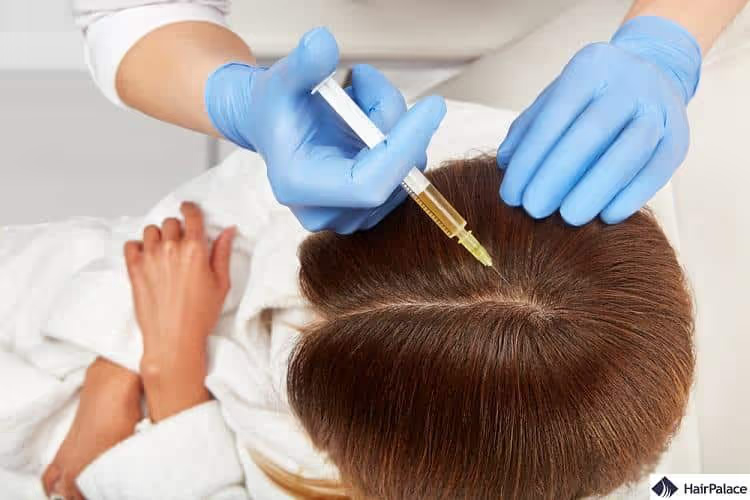
Once the EZPRF is ready, it is placed into the targeted areas of the scalp with precise technique. The treatment itself is generally quick, and most patients are able to return to normal activities soon after their visit. You may experience temporary tenderness, mild redness, or sensitivity at the treatment sites, but these effects are typically short-lived.
Results and treatment planning
Hair restoration is a gradual process, not an overnight change. Because hair grows in cycles, improvements typically develop over time and may become more noticeable with a series of treatments and ongoing maintenance. Patients often choose hair restoration because they want a plan that supports healthier-looking hair gradually and naturally rather than a sudden, dramatic change.
Consistency matters with any hair restoration strategy. Depending on your hair pattern and goals, your treatment plan may include an initial series followed by maintenance sessions at recommended intervals. The right schedule depends on your scalp condition, the degree of thinning, and how your hair responds over time.
Hair Restoration
What is hair restoration with EZPRF?
EZPRF hair restoration is a non-surgical treatment that uses platelet-rich fibrin from your own blood and places it into targeted areas of the scalp to support healthier-looking hair and improved density over time.
Who is a good candidate for EZPRF hair restoration?
Good candidates are often men and women experiencing mild to moderate thinning, increased shedding, a widening part, or early hairline recession who want a non-surgical option for hair restoration.
Is EZPRF hair restoration surgical?
No. EZPRF hair restoration is a non-surgical treatment. It does not involve hair transplant surgery, stitches, or a long surgical recovery period.
What areas of the scalp can be treated?
Common treatment areas include the hairline, temples, crown, and areas of diffuse thinning where hair appears less dense or weaker than before.
How many hair restoration sessions will I need?
The number of sessions depends on your degree of hair thinning, your goals, and how your scalp responds to treatment. Many patients benefit from a series of treatments followed by maintenance visits.
When will I see results from hair restoration?
Hair restoration results develop gradually because hair grows in cycles. Some patients notice changes in shedding, texture, or fullness over time, while more visible improvements may require patience and consistency.
Is there downtime after EZPRF hair restoration?
Most patients return to normal daily activities shortly after treatment. Mild tenderness, redness, or scalp sensitivity may occur temporarily after the appointment.
Does EZPRF use my own blood?
Yes. EZPRF is prepared from a small sample of your own blood, which is processed so platelet-rich fibrin can be used as part of your treatment.
Can hair restoration help with thinning hair in women?
Yes. Hair restoration is often considered by women experiencing diffuse thinning, reduced density, or a widening part, depending on the cause and pattern of hair loss.
Can men benefit from EZPRF hair restoration?
Yes. Men with early thinning, recession at the temples, or crown thinning may consider EZPRF as part of a non-surgical hair restoration plan.
Is hair restoration permanent?
Hair restoration treatment supports your hair goals, but hair and scalp changes can continue over time. Many patients do best with an ongoing plan that may include maintenance treatments.
How do I know if I need hair restoration or another treatment?
A consultation is the best first step. Because hair loss can have different causes, an in-person evaluation helps determine whether EZPRF is appropriate and what type of treatment plan makes the most sense.



.webp)
.webp)